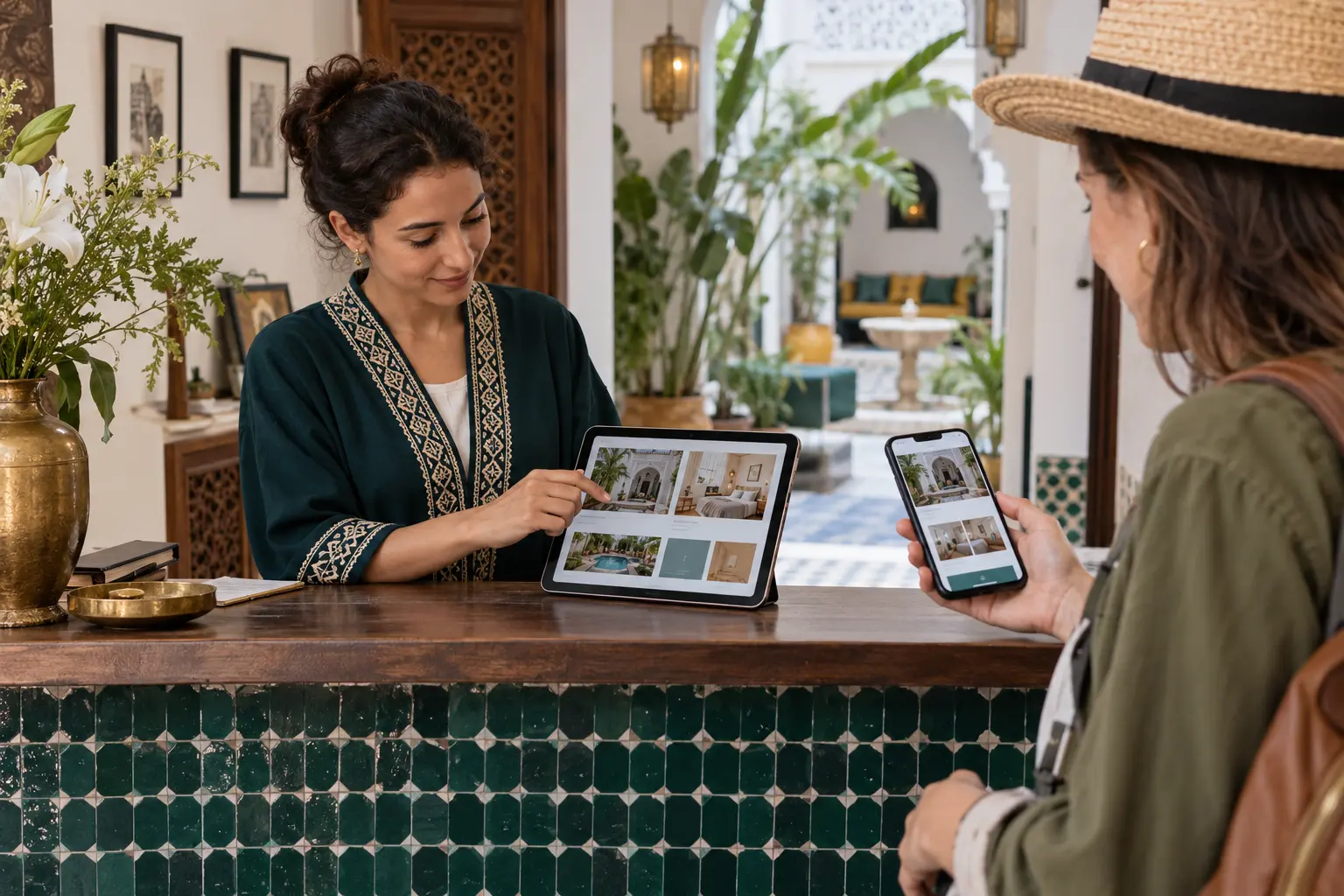
Why move beyond paper
Printed information becomes outdated and is expensive to replace. A digital guide lets a property update opening times, services and instructions while guests keep the same link on their phones.
Essential guest information
Organise Wi-Fi, check-in and checkout, breakfast, parking, contacts, departure instructions and local recommendations into clear sections. This reduces repeated questions at reception.
A tool guests use daily
The guide becomes more useful when guests can request towels, report a fault, order a service and track progress. The property remains in control of its content and requests.
Build an information architecture guests understand
Start with guest needs rather than the hotel organisation chart. Wi-Fi, arrival, checkout, services, requests and emergency help should be one tap from the home screen. Use concrete labels such as “Order breakfast” instead of vague categories. Each screen should answer one question and provide one obvious next action.
Prepare reliable content before publishing
Collect validated opening times, monitored contact numbers, prices, conditions and recent photos. Assign an owner and review date to each section. Translate arrival, departure, access and safety information first, and have sensitive instructions reviewed by a competent speaker. Test links, maps, calls and forms on an unauthenticated phone.
Use the guide across the guest journey
Send the link before arrival so guests can prepare and discover bookable services. Use QR and NFC inside the property for instant access. After checkout, communicate only with guests who gave explicit consent. A guide does not replace human hospitality; it removes repetitive questions so staff can focus on situations that need attention.
Measure outcomes, not vanity metrics
Track openings, section views, submitted requests and response times. A low-view section may be badly named or buried. A popular section followed by many calls may lack essential information. Compare equivalent periods and never present a click as a booking or mix currencies in revenue reporting.
FAQ
Does a guest need an account?
No. Public guide content and services should remain available without an account.
Must the QR code be reprinted after an update?
No, a stable URL can serve updated content.
How many languages should a hotel offer?
Start with languages guests actually use and review critical translations.